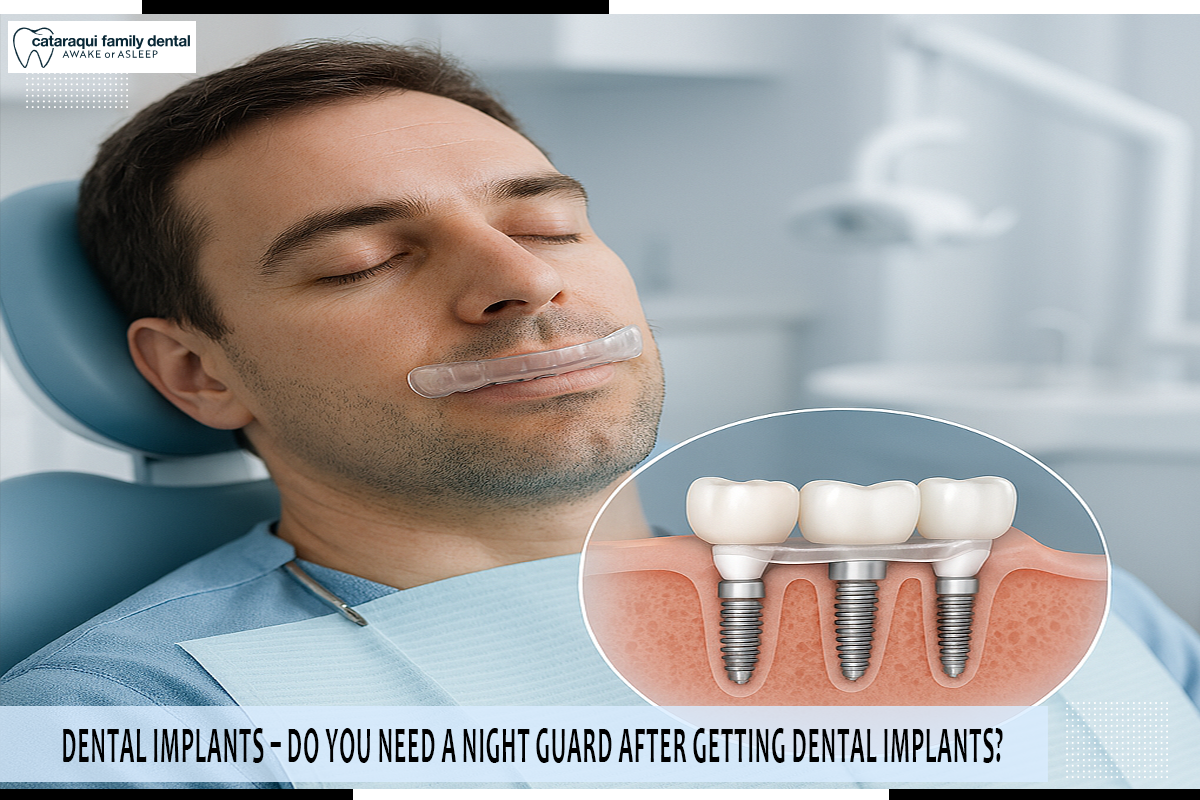
Dental implants are built to last, but they are not indestructible. One of the most common questions we hear after implant treatment is whether a night guard is still necessary, especially for patients who grind or clench their teeth while sleeping. The short answer is that for many people, a night guard plays an important role in protecting both implants and natural teeth.
Grinding and clenching, also called bruxism, often happens without awareness. The forces involved can be significant, sometimes stronger than normal chewing. While implants do not decay, excessive pressure can affect the surrounding bone, the implant crown, or neighbouring teeth. This is why night guards are often recommended as part of long-term implant care.
Why a Night Guard Matters After Dental Implants
Dental implants function differently from natural teeth.Natural teeth have ligaments that help absorb pressure. Implants do not. They are anchored directly into the bone, which means grinding forces are transferred straight to the implant and surrounding structures. Without protection, this pressure may lead to:
A properly fitted night guard helps distribute these forces more evenly and reduces the risk of complications over time.
Which Type of Night Guard Is Best for Implants?
Not all night guards are the same, and when implants are involved, the type matters.
Custom-Made Night Guards
For implant patients, custom dental night guards are usually the safest option.These are designed using impressions or digital scans of your mouth and adjusted to your bite. They are made to:
Hard vs. Dual-Layer Guards
In many implant cases, a hard or dual-layer night guard is recommended. These are durable enough to handle grinding forces while maintaining a controlled bite surface.
Why Store-Bought Guards Are Not Ideal
Over-the-counter night guards are often bulky and poorly fitted. For implant patients, they can:
Because implants respond differently to force than natural teeth, a professionally fitted guard offers better protection and predictability.
How Long Do You Need to Wear a Night Guard?
The length of time you need to wear a night guard depends on your habits and risk factors.
Short-Term Use
Some patients only need a night guard during:
Long-Term or Ongoing Use
Others benefit from wearing a night guard every night,especially if they:
In many cases, night guard use is ongoing and not temporary. Regular dental checkups help determine whether adjustments or continued use are needed.
Is a Night Guard Covered by Insurance?
In Ontario, insurance coverage for night guards varies by plan.
Many employer or private dental plans:
Coverage is usually listed under:
However, night guards are not typically covered under the Canadian Dental Care Plan (CDCP), as they are considered appliances rather than routine preventive services.
Because coverage details differ, it’s always a good idea to confirm:
We often help patients review these details before proceeding, so there are no surprises.
Signs You May Need a Night Guard After Implants
You may benefit from a night guard if you notice:
Even if symptoms seem mild, early protection can prevent long-term damage.
Our Approach at Cataraqui Family Dental
At Cataraqui Family Dental, implant care doesn’t stop once the crown is placed. Long-term success depends on how implants are protected during daily habits that are easy to overlook, especially while sleeping.
This information is shared to help you understand why night guards are often part of implant maintenance, not as an extra step, but as a protective measure that supports your investment in your oral health.
If you ever have questions about grinding, night guard options, or whether your implant would benefit from added protection, those conversations are always welcome. Every mouth is different, and care decisions should reflect that.
If you have dental implants and aren’t sure whether a night guard is right for you, we’re happy to talk it through at your next visit. A short conversation and exam can often clarify whether protection is needed now or something to keep in mind for the future.