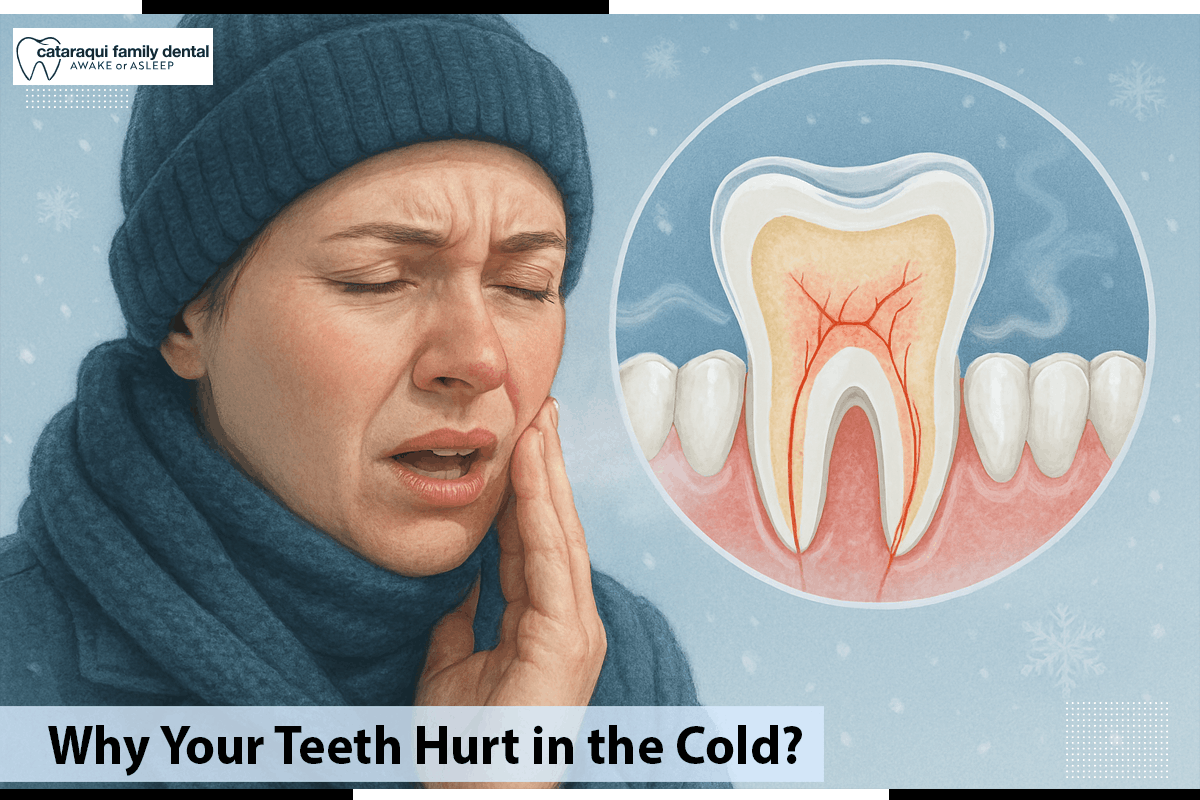
Teeth hurt in the cold because the protective enamel layer is compromised or gum tissue has receded, exposing sensitive inner structures of the tooth. Cold sensitivity is one of the most common dental complaints, especially in colder climates.
At Cataraqui Family Dental, we frequently see patients experiencing this issue and asking whether it is normal or a sign of something more serious. Below, we explain what causes cold sensitivity, when it becomes a concern, and how it can be treated.
What Causes Teeth to Be Sensitive to Cold?
Teeth are protected by enamel on the outside and cementum around the roots. Beneath these layers lies dentin, which contains microscopic tubules that lead directly to the tooth’s nerve. When dentin becomes exposed,cold air or cold drinks can trigger sharp discomfort. Common causes include:
Once dentin is exposed, temperature changes are transmitted more easily to the nerve.
Is Cold Sensitivity a Sign of a Dental Problem?
Not always, but it can be. Mild sensitivity that resolves quickly is often manageable. However, sensitivity that is:
may indicate an underlying issue such as decay, a cracked tooth, or gum disease. A professional assessment by a Cataraqui dentist helps determine whether sensitivity is cosmetic, structural, or disease-related. Feel free to reach out to us for an assessment.
Why Does Cold Weather Make Tooth Sensitivity Worse?
Cold weather affects teeth in two ways. First, inhaling cold air causes rapid temperature changes that stress enamel and dentin. Second,repeated expansion and contraction from temperature fluctuations can worsen microscopic cracks in teeth over time.
People who already have exposed dentin or enamel wear often notice sensitivity increases during the winter months. This is especially common in areas with colder seasonal temperatures.
Can Gum Recession Cause Cold Sensitivity?
Yes. Gum recession is a leading cause of cold sensitivity.When gums pull away from the tooth, the root surface becomes exposed. Unlike enamel, root surfaces are not designed to with stand temperature changes. Gum recession may result from:
Addressing the cause of gum recession is essential for long-term relief.
How Is Cold Sensitivity Diagnosed?
Diagnosis starts with a clinical exam. Your dentist may:
In some cases, X-rays are needed to rule out deeper structural issues. Identifying the exact cause allows for targeted treatment rather than temporary fixes.
What Treatments Help Reduce Cold Tooth Pain?
Treatment depends on the underlying cause. Options may include:
Not all sensitivity requires invasive treatment, but ignoring it can allow minor issues to progress.
When Should You See a Dentist for Cold Sensitivity?
You should schedule an appointment if:
Early evaluation often prevents more complex treatment later.
How Cataraqui Family Dental Approaches Tooth Sensitivity
At Cataraqui Family Dental, we focus on identifying the cause rather than masking symptoms. Cold sensitivity is often an early warning sign, and addressing it promptly helps protect long-term oral health.
If cold weather has made your teeth uncomfortable, a professional assessment can provide clarity and relief. Our Cataraqui dentist team is here to answer questions, explain findings, and recommend appropriate care based on evidence and experience.
.png)