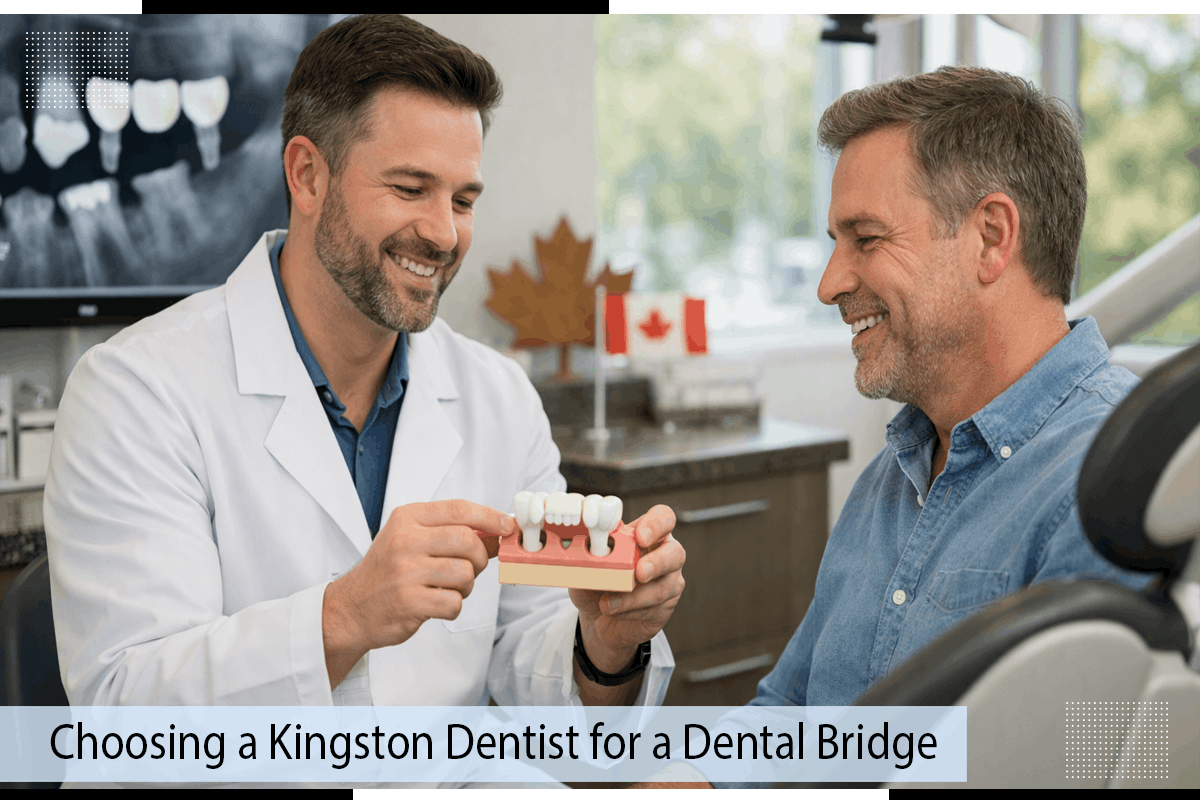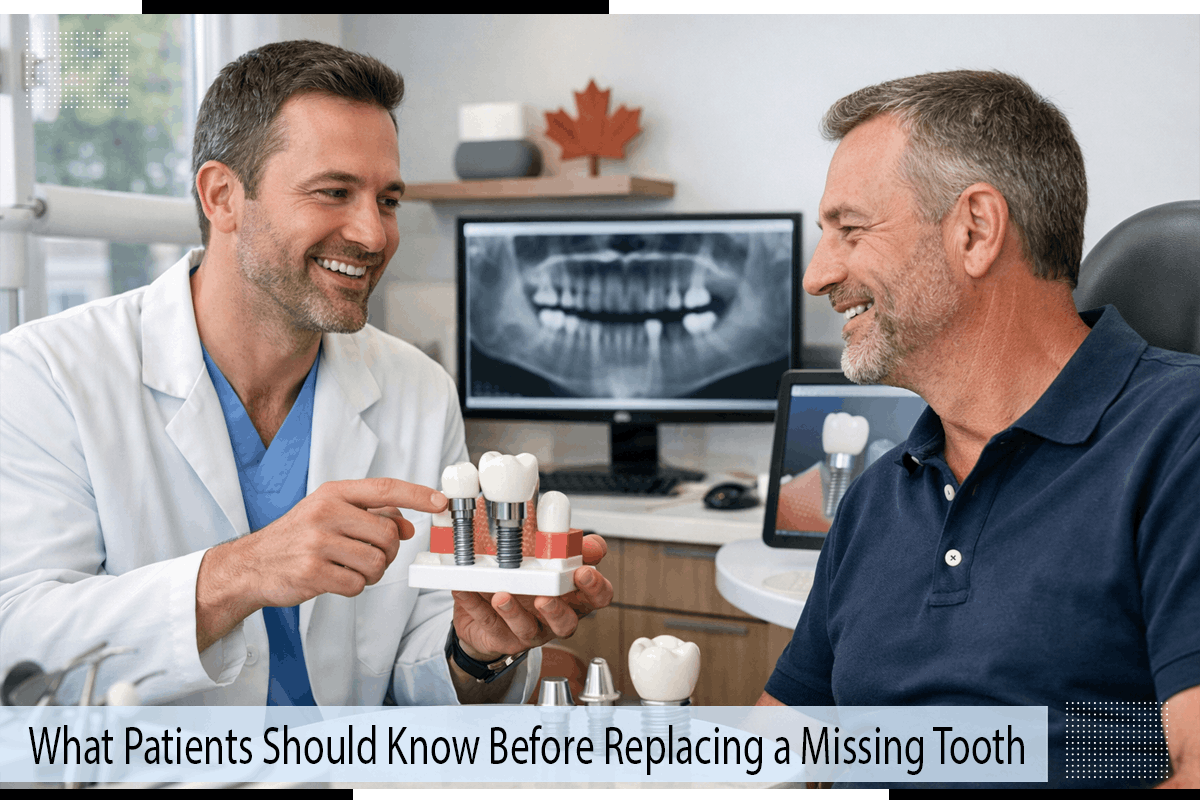
A missing tooth changes not just the aesthetics of your smile. It may affect chewing, speech, bite balance, confidence, and the way nearby teeth behave over time. Some people adjust to the gap for a while.Others begin noticing food getting trapped, teeth shifting, or discomfort when chewing on one side.
Patients searching for dental implant in Kingston often want a clear answer before booking a consultation: is an implant the right choice, or would a bridge or denture make more sense?
The answer depends on oral health, bone support, budget,timing, medical history, and personal goals. A proper dental exam is the starting point. Let’s talk about it.
What Are the Benefits, Costs, and Treatment Steps Involved in Getting Dental Implants in Kingston?
A dental implant is used to replace the missing root of a tooth. Once healed, it supports a replacement tooth, often a crown. Many patients choose implants because they feel stable, do not rely on neighbouring teeth for support in the same way a traditional bridge does, and they help restore chewing function in the missing tooth area.
Cost depends on several factors. These may include the number of missing teeth, whether bone grafting is needed, the type of restoration, imaging, surgical complexity, and the materials used. A single implant is different from several implants supporting a bridge or denture.Patients should expect a personalized estimate after examination rather than a fixed online answer.
The treatment steps usually include consultation, imaging,treatment planning, implant placement, healing time, and restoration with a crown or other replacement tooth. Some cases move faster. Others require additional preparation before implant placement.
Why Replacing a Missing Tooth Matters
Leaving a missing tooth untreated may create long-term problems. Teeth beside the gap may start to drift. The opposing tooth may move into the open space. Chewing may become uneven. Some patients begin avoiding certain foods or relying heavily on one side of the mouth.
A missing tooth may also change the way the smile looks,especially when the gap is visible. For many patients, confidence becomes part of the decision. Function and appearance often sit together in implant conversations.
Dental implants are one option. Bridges and dentures may also work well, depending on the situation. A careful Kingston dentist should explain all realistic options instead of making one treatment sound automatic.
Who May Be a Good Candidate for a Dental Implant?
A good implant candidate usually has healthy gums, enough bone support, and a mouth that is stable enough for surgical treatment. Oral hygiene is important because implants need regular care, just like natural teeth. Gum disease, heavy smoking, uncontrolled medical conditions, or insufficient bone may affect timing or eligibility.
Some patients need preparatory treatment first. This may include gum care, extraction site healing, bone grafting, or treatment for existing dental concerns. Being told you are not ready for an implant today does not always mean implants are impossible. It may mean the foundation needs attention first.
At Cataraqui Family Dental, we look at the full picture before discussing implant treatment. The purpose is to understand whether a implant fits the patient, the mouth, and the long-term plan.
Dental Implants Compared With Bridges and Dentures
Each tooth replacement option has strengths.
· A bridge may replace a missing tooth by using neighbouring teeth or implants for support. It may be suitable when the teeth beside the gap already need crowns or when implant placement is not the preferred option.
· A partial denture may replace one or more missing teeth with a removable appliance. It may cost less upfront and suit patients who are not ready for surgical treatment.
· A dental implant is fixed in the jaw and supports a replacement tooth without being removable. Many patients like the stability, chewing support, and natural feel. The decision should come after discussing health, maintenance, cost, and expected treatment time.
The best Kingston dentist is the one who explains the trade-offs clearly.
What the Implant Process Usually Looks Like
The first visit focuses on information. At Cataraqui Family Dental, we review the missing tooth area, take X-rays or scans when needed,check gum health, review medical history, and discuss the patient’s goals.
If implant treatment is suitable, the next step is planning.This includes looking at bone support, bite position, neighbouring teeth, and the final restoration. The implant is then placed in the jaw by the appropriate provider. Healing time allows the bone and implant to integrate. After healing,the final crown or restoration is attached.
Patients should understand that implants require patience.The process is planned in stages because long-term stability matters more than speed.
How to Care for a Dental Implant
Implants still need daily brushing, flossing or special cleaning tools, and regular dental visits. The implant itself cannot get a cavity, but the gum and bone around it need to stay healthy. Poor cleaning may lead to inflammation around the implant.
Night grinding may also affect implant restorations. Some patients need a night guard to protect the implant crown and natural teeth. Regular checkups help monitor the bite, gum tissue, and restoration.
Talk to Cataraqui Family Dental About Dental Implants
If you are researching dental implant Kingston options, begin with a consultation rather than a guess. At Cataraqui Family Dental, we explain implant treatment, compare alternatives, review your oral health, and help you understand the steps involved.
Book a visit with our team to discuss dental implants in Kingston and find out which tooth replacement option makes sense for your smile, comfort, and long-term oral health.
.png)