Wisdom teeth are the last permanent teeth to develop, usually appearing in the late teens or early twenties. For some people, they emerge without causing significant problems. For others, they may become impacted, partially erupt, or contribute to discomfort and other oral health concerns.
If you are experiencing symptoms or have questions about wisdom teeth Kingston, understanding the purpose of an assessment and what may happen during the extraction process can help you make informed decisions about your oral health.
At Cataraqui Family Dental, patients can discuss their individual concerns with a qualified Kingston dentist and receive recommendations based on their specific dental needs.
What Are Wisdom Teeth?
Wisdom teeth, also known as third molars, are located at the very back of the mouth. Most people can develop up to four wisdom teeth, although the number varies from person to person.
Because the jaw may not have enough space to accommodate them, wisdom teeth do not always erupt properly. They may:
Not every wisdom tooth requires extraction. A dental professional can assess its position, condition, and potential effect on surrounding teeth and tissues before recommending treatment.
How Do I Know If My Wisdom Teeth Need to Be Removed?
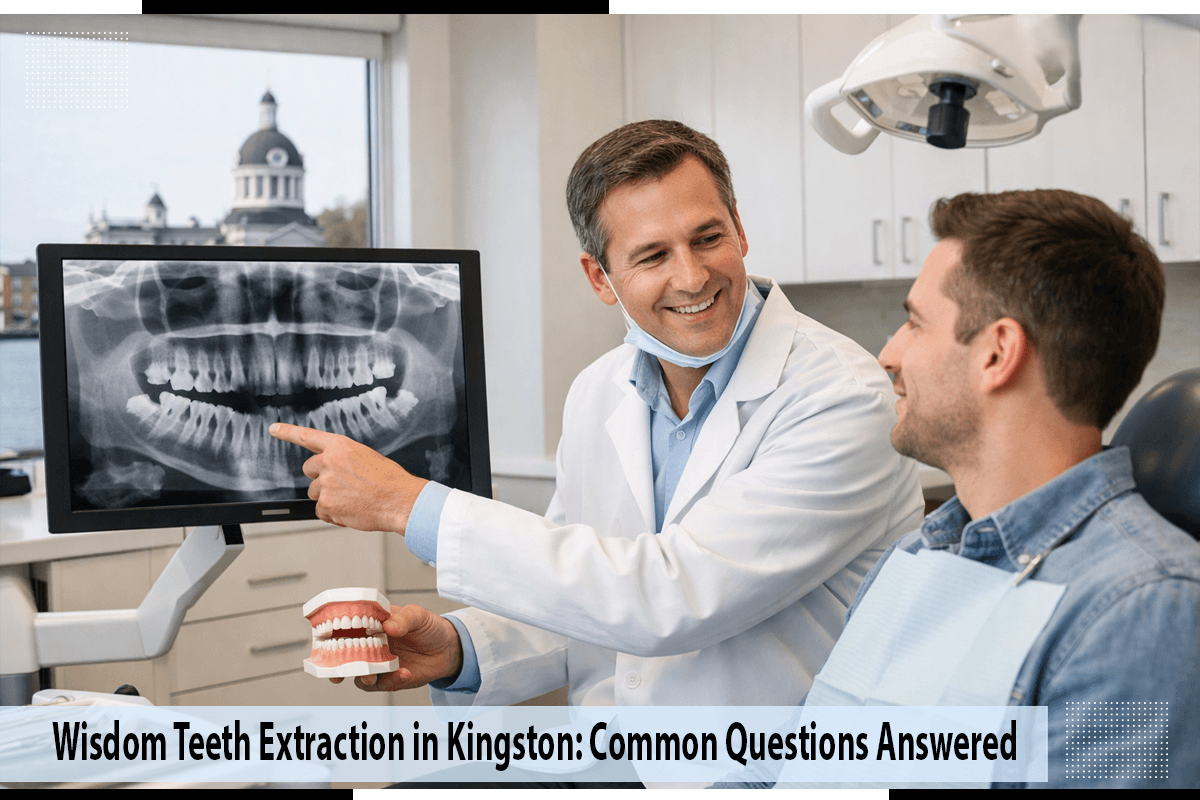
The only way to determine whether removal is appropriate is through a professional dental assessment. A Kingston dentist may examine your mouth and use diagnostic imaging when clinically appropriate to evaluate the position of your wisdom teeth.
Some people seek an assessment because they are experiencing symptoms such as:
These symptoms can have different causes, so it is important not to assume that wisdom teeth are responsible without a proper examination.
Is Wisdom Teeth Extraction Always Necessary?
No. Wisdom teeth do not automatically need to be removed simply because they are present.
A dentist may recommend monitoring a wisdom tooth when it is healthy, functioning appropriately, and can be properly cleaned. Extraction may be considered when a wisdom tooth is associated with a dental problem or when its position creates concerns for surrounding oral structures.
Patients considering treatment for wisdom teeth Kingston should have an individual discussion with their dental professional about the potential benefits, risks, and available alternatives.
What Happens During a Wisdom Tooth Assessment?
During an appointment, your dentist will review your oral health and discuss any symptoms or concerns you may have.The assessment may include an examination of your teeth and gums and diagnostic imaging where appropriate.
Your dentist may evaluate factors such as:
Based on these findings, your dentist can explain whether monitoring, additional treatment, or extraction maybe appropriate.
Is Wisdom Teeth Extraction Painful?
Patients often have concerns about discomfort during dental procedures. Before treatment, your dental team should explain the procedure and the options available to help manage discomfort and anxiety.
The experience of recovery can vary depending on factors such as the position of the tooth, the complexity of the procedure, and an individual's overall health. Your dental professional can provide personalized information about what to expect before and after treatment.
If you have concerns about pain management or anxiety, discuss them openly with your dental provider before the procedure.
How Long Does Recovery Take?
Recovery experiences vary from person to person. Some patients may feel ready to resume certain normal activities relatively quickly, while others may require more time.
Following the aftercare instructions provided by your dental professional is important. These instructions may address topics such as eating, oral hygiene, physical activity, and managing swelling or discomfort.
If you experience symptoms that concern you during recovery, contact your dental office for guidance.
When Should I Contact a Dentist?
If you are experiencing persistent pain, swelling, or other concerns involving the back of your mouth, arranging an assessment with a Kingston dentist can help identify the cause.
Seeking professional advice is especially important if symptoms worsen or interfere with eating, sleeping, or normal daily activities.
Discuss Your Wisdom Teeth with Cataraqui Family Dental
Every patient's situation is different. Whether your wisdom teeth are causing discomfort or you simply want to understand their condition, a professional dental assessment can provide clearer answers.
At Cataraqui Family Dental, patients can discuss concerns related to wisdom teeth Kingston and learn about appropriate options based on their individual oral health needs. A thorough consultation allows your dental professional to explain findings, answer questions, and help you make an informed decision about your care.