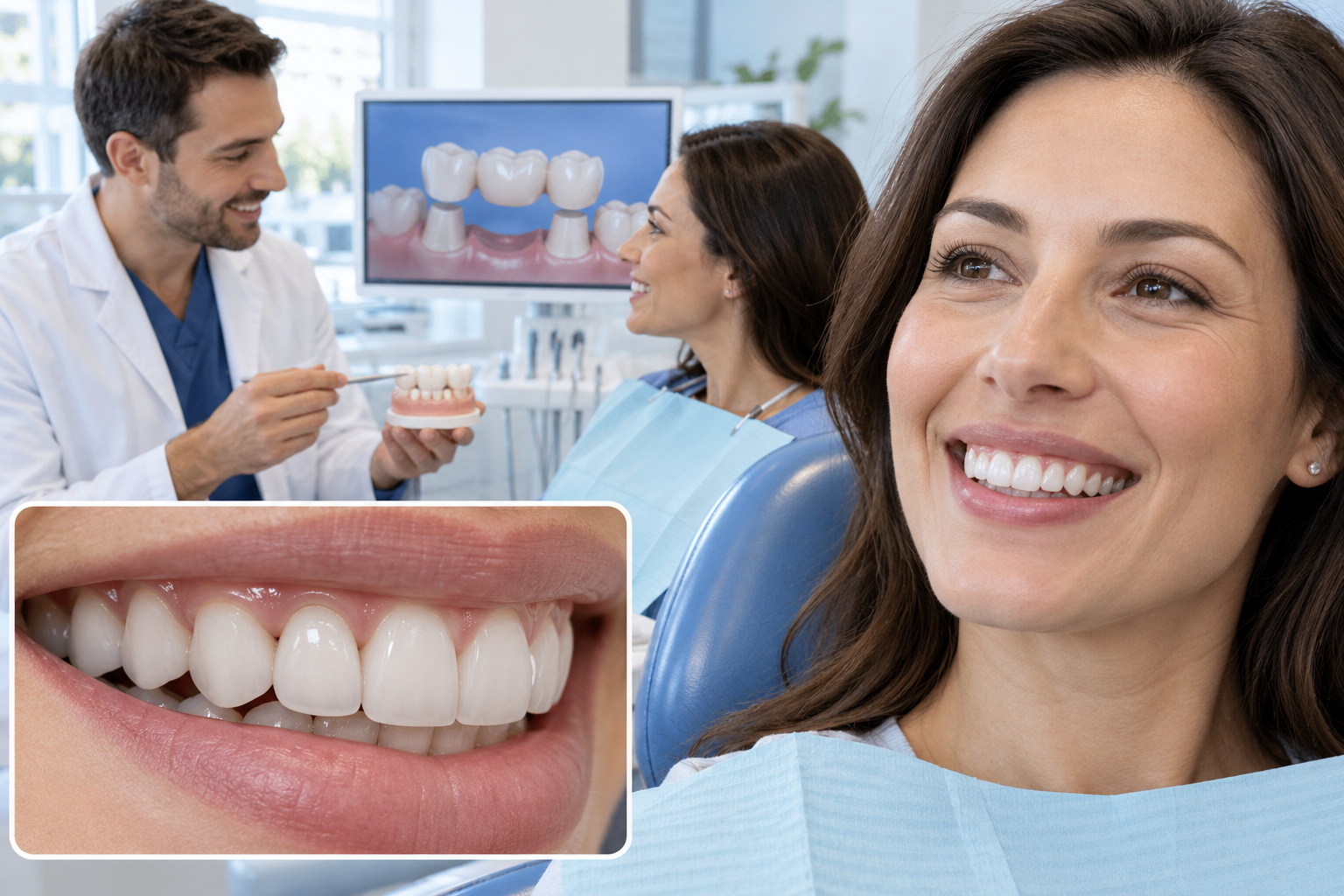
Missing one or more teeth can affect more than your appearance. It may make chewing uncomfortable, change the way you speak, and allow neighbouring teeth to shift into the empty space. Overtime, these changes can also affect your bite and overall oral health.
A dental bridge is one option for replacing missing teeth and restoring everyday dental function. For patients exploring restorative dentistry, understanding how a bridge works, what the treatment involves, and whether it is suitable can make the decision easier.
At Cataraqui Family Dental, patients in Kingston can discuss tooth replacement options and learn whether a dental bridge in Kingston may suit their individual dental needs.
What Is a Dental Bridge?
A dental bridge is a fixed dental restoration designed to replace one or more missing teeth. It typically consists of artificial teeth, called pontics, supported by natural teeth or dental implants.
In a traditional dental bridge, the neighbouring teeth are prepared to support dental crowns, which hold there placement tooth in position. Other designs may use different support methods depending on the patient's oral health and the location of the missing tooth.
Unlike removable dentures, a traditional fixed bridge stays in place and is not designed to be taken out bythe patient for daily cleaning.
How Can a Dental Bridge Restore Your Smile?
Losing a tooth can create a noticeable gap, particularly when it affects the front of your mouth. A dental bridge can help fill that space with an artificial tooth designed to complement the surrounding teeth.
Here are some ways a bridge may support your smile:
1. Improves the Appearance of Missing Teeth
A missing tooth can affect the balance and appearance of your smile. A dental bridge helps fill the gap, with the replacement tooth selected to complement the colour, shape, and size of nearby teeth.
2. Supports Everyday Chewing
Missing teeth can make biting and chewing certain foods more difficult. Replacing the gap with a suitable dental restoration may help distribute chewing forces more evenly and improve everyday function.
3. Helps Maintain Tooth Alignment
When a tooth is lost, neighbouring teeth may gradually move into the empty space. This movement can affect your bite and make cleaning between teeth more challenging. A dental bridge can help occupy the gap and reduce the opportunity for unwanted shifting.
4. Supports Clearer Speech
Teeth play an important role informing certain sounds. Depending on which tooth is missing, a gap may affect pronunciation. Replacing the missing tooth may help improve speech function.
What Are the Different Types of Dental Bridges?
Not every patient requires the same type of dental bridge. Your dentist will consider the location of the missing tooth, the condition of neighbouring teeth, and your overall oral health.
Common options include:
Each option has different advantages and limitations. A dental examination helps determine which approach may be appropriate.
What Happens During the Dental Bridge Procedure?
Getting a dental bridge generally involves several steps.
Initial Consultation: Your dentist examines your teeth and gums, reviews your dental history, and may recommend dental X-rays to assess the supporting teeth and surrounding structures.
Tooth Preparation: For a traditional bridge, the supporting teeth are carefully reshaped to accommodate dental crowns. Impressions or digital scans are then taken to help create the restoration.
Temporary Bridge: A temporary restoration may be placed to protect prepared teeth while the permanent bridge is being made.
Final Placement: Once the permanent bridge is ready, your dentist checks its fit, bite, and appearance before securing it in place.
The number of appointments and overall treatment timeline depend on the type of bridge and individual circumstances.
Howto Care for Your Dental Bridge
Proper maintenance helps protect your restoration and the surrounding teeth. Although a bridge cannot develop cavities, the natural teeth supporting it can still experience decay and gum disease.
Follow these daily care practices:
Your dentist can demonstrate suitable cleaning techniques based on your bridge design.
Isa Dental Bridge the Right Choice for You?
A dental bridge may be an option if you have one or more missing teeth and sufficient support from neighbouring teeth or dental implants. However, it is not suitable for every patient.
Factors such as gum health,supporting tooth structure, bite alignment, and the number of missing teeth all influence treatment planning. In some situations, a dental implant or removable partial denture may be worth considering instead.
Discussing these options with a Kingston dentist can help you understand the potential benefits, limitations, costs,and maintenance requirements before making a decision.
Restore Your Smile With Cataraqui Family Dental
Living with missing teeth does not mean you have to ignore changes in your smile or chewing function. A dental bridge may offer a fixed tooth replacement option, depending on your oral health and treatment needs.
At Cataraqui Family Dental, patients can discuss restorative dentistry options and receive guidance based on an individual dental assessment.
If you are considering a dental bridge in Kingston, contact Cataraqui Family Dental to arrange a consultation and learn more about available tooth replacement options.