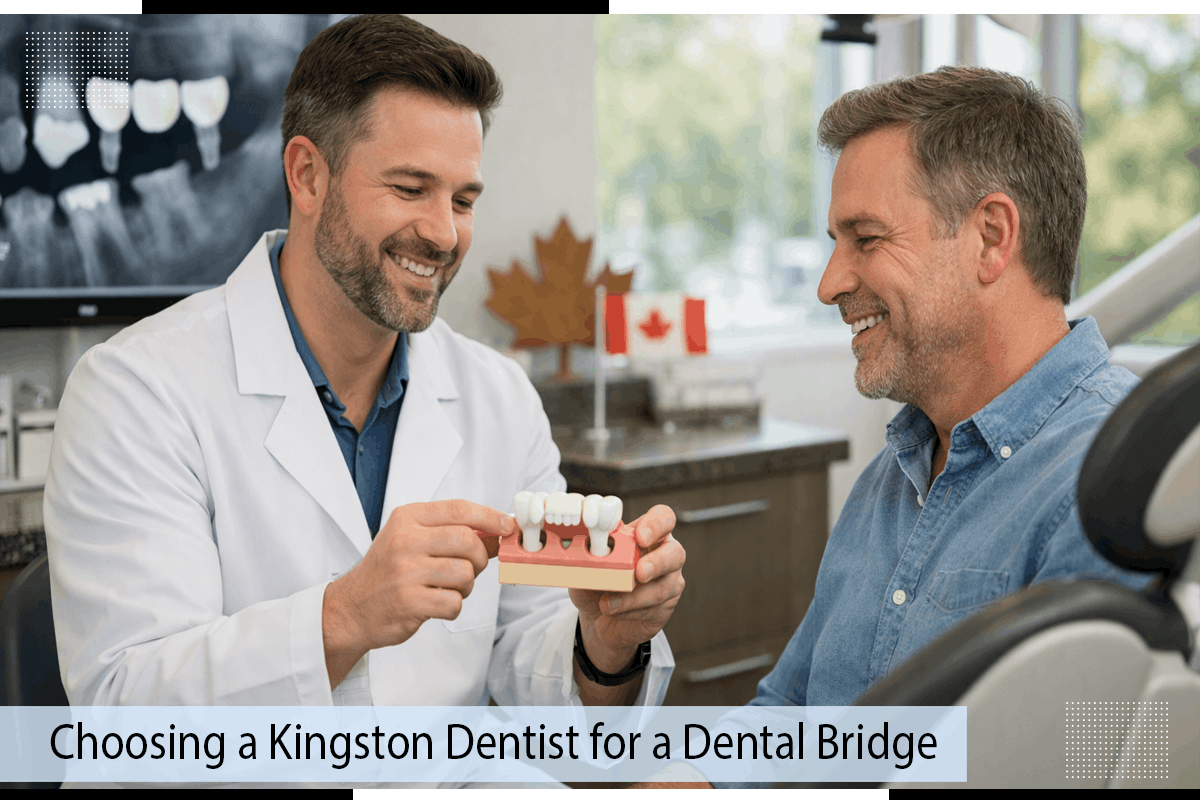
Orthodontic treatment has evolved significantly over the years. Today, patients exploring options to straighten their teeth often encounter two common approaches: clear aligner therapy and traditional braces. Both methods aim to improve alignment, bite function, and long-term oral health. However, they differ in materials, mechanics, and daily maintenance.
At Cataraqui Family Dental in Kingston, ON, we want to provide patients with clear, evidence-based information so they can make informed decisions about their orthodontic care. In this article, we offer an objective comparison of clear aligners and traditional braces, outlining how each system works and what patients should consider before beginning treatment.
What is Clear Aligner Therapy?
Clear aligner therapy uses a series of custom-made,transparent trays designed to gradually move teeth into planned positions. Each set of aligners is worn for a specified period, typically one to two weeks,before progressing to the next set.
Aligners are removable and are usually worn 20 to 22 hours per day. They are taken out for eating, brushing, and flossing. Digital scans are commonly used to plan tooth movement and monitor progress.
Patients searching for options such as Invisalign Kingston often inquire about how clear aligners fit into their lifestyle. Clear aligners are designed to be discreet and are generally less noticeable than metal braces. However, consistent wear is recommended and needed. Treatment success depends heavily on patient compliance.
Clear aligners may be suitable for mild to moderate alignment concerns, including spacing, crowding, and certain bite issues. A comprehensive assessment by a Kingston dentist is required to determine candidacy.
Understanding Traditional Braces
Traditional braces consist of metal or ceramic brackets bonded to the teeth and connected by arch wires. These wires apply controlled pressure to guide teeth into proper alignment over time. Adjustments are made periodically during in-office visits.
Because braces are fixed appliances, they work continuously without requiring patient removal or reinsertion. This can be beneficial in cases where compliance may be a concern. Braces are often recommended for more complex orthodontic conditions, including significant bite discrepancies or severe crowding.
Treatment duration varies depending on the individual case. Regular monitoring and adjustments are necessary to ensure appropriate movement and overall oral health during treatment.
Comparing Treatment Mechanics
Both clear aligners and braces rely on controlled force to move teeth. However, their delivery systems differ.
Clear aligners use removable trays that are digitally designed and replaced in sequence. Movement occurs incrementally as each new tray shifts the teeth slightly further.
Traditional braces use brackets and wires that are adjusted over time. The orthodontic forces can be modified during appointments to address specific movement needs.
In some clinical scenarios, braces may provide greater precision for complex movements. In others, aligners may be appropriate for targeted corrections. The recommended modality depends on diagnosis, treatment goals, and overall oral health.
Oral Hygiene and Daily Maintenance
Maintenance requirements differ between the two options.
With clear aligners, patients remove the trays to brush and floss normally. This may make oral hygiene routines more straight forward compared to fixed appliances. However, aligners must be cleaned regularly, and they should not be worn while consuming food or beverages other than water.
Traditional braces require additional attention to oral hygiene. Brushing and flossing around brackets and wires may take more time.Special tools such as inter dental brushes or floss threaders are often recommended. Regular professional cleanings are important to maintain gum health throughout treatment.
Aesthetic Considerations
Clear aligners are designed to be minimally visible. Many patients appreciate the transparent appearance, especially in professional or social settings.
Traditional braces are more noticeable, although ceramic options may offer a less visible alternative compared to metal brackets. The choice often depends on personal preference and clinical suitability rather than appearance alone.
Treatment Duration and Monitoring
The length of orthodontic treatment varies. Some cases maybe completed within several months, while others require a longer time frame.
Clear aligner therapy involves a predetermined series of trays, with progress evaluated during scheduled check-ins. Braces require periodic wire adjustments to guide tooth movement.
Regular monitoring by a Kingston dentist ensures that treatment is progressing as planned and allows for timely adjustments when needed.
Suitability and Professional Assessment
Not every patient is an ideal candidate for both options.Factors such as jaw alignment, degree of crowding, age, oral hygiene habits,and overall health influence treatment planning.
An individualized consultation at Cataraqui Family Dental includes a thorough clinical examination, diagnostic imaging, and a discussion of treatment goals. Based on these findings, we outline appropriate options and explain the anticipated course of care.
Rather than asking which option is “better,” the focus remains on which modality is clinically appropriate for the specific patient.
In Summary
Clear aligner therapy and traditional braces are both established orthodontic treatments with distinct characteristics. Aligners offer a removable and discreet option for suitable cases, while braces provide a fixed solution often recommended for more complex concerns.
If you are considering orthodontic treatment, including options such as Invisalign in Kingston,we encourage you to schedule a consultation at Cataraqui Family Dental in Kingston, ON. Our team will provide a comprehensive evaluation and discuss the most appropriate approach based on your individual oral health needs and treatment objectives.
.png)